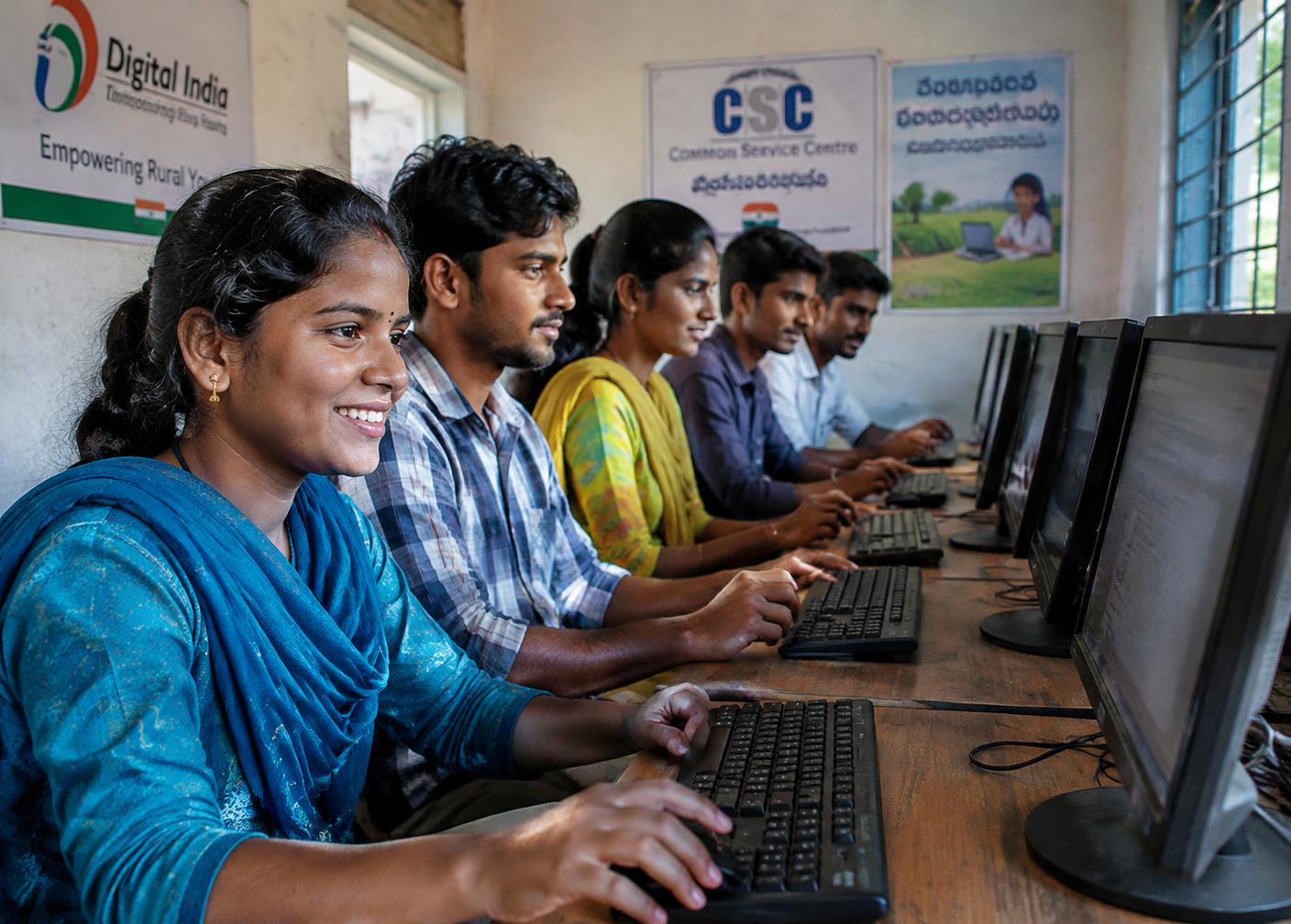
Digital Inclusion · Project concept
Digital Futures
Rural Youth Empowerment
- Beneficiaries
- 300
- Indicative budget
- ₹18 lakh
- Duration
- 12 months
- Geography
- Telangana (rural mandals)
- Target group
- Rural youth, 18–29
Hypothetical demonstration assumptions
Overview
A community-based digital literacy and employability programme helping rural young people build practical computing skills, navigate online opportunities and step confidently into the digital economy.
Objectives
- 01
Equip 300 young people with certified, practical digital skills
- 02
Build workplace readiness and online job-search capability
- 03
Establish two community digital hubs that continue after the programme
- 04
Facilitate employment, internship or self-employment pathways
Timeline & implementation phases
Month 1–2
Discover
Community needs assessment, site selection, partner onboarding and learner mobilisation.
Month 3–8
Build
Three cohorts complete a 12-week digital and employability curriculum at two hubs.
Month 9–11
Connect
Placement drives, employer interactions and freelancing orientation.
Month 12
Report
Endline assessment, impact report and sustainability handover.
Detailed sample budget
| Line item | Share | Amount |
|---|---|---|
| Training & delivery | 45% | ₹8.10 lakh |
| Equipment & resources | 25% | ₹4.50 lakh |
| Mobilisation | 10% | ₹1.80 lakh |
| Monitoring & evaluation | 10% | ₹1.80 lakh |
| Programme management | 10% | ₹1.80 lakh |
| Total (indicative) | 100% | ₹18 lakh |
Implementation model
Delivered with a local implementation partner and certified trainers, with ProGrow Foundation responsible for curriculum quality, monitoring and CSR reporting.
Expected results
- Measurable rise in digital proficiency scores
- Youth with active professional profiles and CVs
- Two sustainable hubs managed by local ambassadors
Proposed KPIs
Risk & monitoring approach
Learner drop-out during harvest season
Flexible batch timings and a seasonal calendar agreed with the community.
Connectivity interruptions
Offline-ready content and backup data plans.
Limited local job demand
Early employer mapping and remote-work orientation.
Monitoring: baseline and endline surveys, monthly field reports, quarterly partner reviews and an independent mid-term check where budget allows.